


Coif 12th Century
***&&&***array(157) { ["articleID"]=> int(6261) ["articleDetailsID"]=> int(20976) ["ordernumber"]=> string(8) "32230145" ["highlight"]=> bool(false) ["description"]=> string(184) "The 12th-century coif is a simple, close-fitting cap that covers your hair and ears. In the Middle Ages, it was a staple for almost everyone, either worn on its own or as a base layer." ["description_long"]=> string(1517) "The 12th-century coif is a simple, close-fitting cap that covers your hair and ears. In the Middle Ages, it was a staple for almost everyone, either worn on its own or as a base layer. If you're wearing a helmet or a mail coif, this piece is essential for stopping your hair from getting snagged in the metal and making the fit much more comfortable.
We use breathable cotton for this coif to help keep your head cool when you're active. It secures with two simple ties under the chin, so it won't slide around while you move. While it's styled after high-medieval fashion, these stayed in use all the way through the late medieval period, so it fits a huge range of kits.
The seams are sewn flat to prevent those annoying pressure marks you normally get from wearing headgear stacked up. It also acts as a sweat barrier, which helps keep your more expensive hats and helmets looking good for longer.
Highlights
- Common headwear for everyone, from knights to peasants, throughout the Middle Ages.
- Breathable cotton helps manage heat and moisture during long events
- Under-armor protection stops your hair from pulling in mail or helmets
- Flat seams stay comfortable even when you're wearing heavy gear on top
- Easy to wash and maintain after a weekend in the dirt
- A period-fluid piece, that while in this style was normalized in the 12th century, was worn well into the late medieval period.
The way the human children look at you, you would assume they have never seen an elf before. Granted, it isn’t often that you travel into cities. You prefer the tranquil sounds of the forest, away from the stench and chaos of busy human streets.
However, you have business with a certain wizard in town. So while your elven garb--decorated Fur Hood, tunic, and weapons--cause you to stand out amongst the crowd, you continue without raising a fuss. After all, they are only short-lived creatures. They don’t know any better than to stare.
DETAILS
Epic Armoury’s Fur Hood is an embroidered mantle with a long hood tail. The mantle covers the shoulders, keeping the upper chest warm while the hood protects the head and face from harsh wind. Elvish embroidery and polyester fur trim embellishes this hood, adding great detail to the felted wool. The inside is lined with soft, comfortable cotton.
Hoods are great garments for rounding off character looks, and the Fur Hood is a stylish garment that especially fits a roguish or elven character. Adjust the hood’s facial opening with flat split-leather cord lacing at the throat.
HISTORY
- One of the oldest garments known to humanity
- Common fashion in medieval Europe, especially with a hood
NOTE: BLUE DISCONTINUED 2019
The snows have come, but despite the cold your village still depends on you to defend it from hungry raiders. The northern winters can be harsh, making men and women particularly desperate.
Thankfully, your Medieval Hood is secure and keeps you warm. You keep the hood over your head as you patrol the walls, pulling it close to keep away the biting wind. At least it is easy to spot incoming trouble against the pure white of snow. You’ll see anyone coming.
DETAILS
Epic Armoury’s Medieval Hood is a hood with a mantle and long hood tail. The mantle covers the shoulders, keeping the upper chest warm while the hood protects the head and face from harsh wind. Made from felted, blended wool and lined on the inside with soft cotton, this hood is comfortable and solid. Decorative stitches line the hood and hem, embellishing and adding great detail to a practical product.
Put on this hood by simply slipping it over your head--it’s easy and cozy to wear. Hoods are great garments for rounding off your look, and the Medieval Hood is a stylish layer that fits a wide variety of character types.
HISTORY
- One of the oldest garments known to humanity
- Common fashion in medieval Europe, especially with a hood
- Hoods were a common garment worn by all social classes in a huge variety of forms and shapes
Oh no, you think, as a sword and a helmet are thrust into your farm-calloused hands. You’ve never been trained as a soldier, let alone asked to fight on a dangerous battlefield!
But here you are, suddenly standing in a row of your neighbors. You await the advancing orc raid said to be headed for your farms and your town, and you just hope that somehow you’ll make it through. At least your Helmet feels solid on your head. That’s something to be thankful for, at least...right?
DETAILS
Epic Armoury’s Ready for Battle Brawl Belt is a long slender belt made from black chrome-tanned, split-leather, providing a good anchor for swords and pouches. The belt is segmented, each segment twin-layered and interlocked with the next, reinforced by a thick leather cord that runs along the length of the belt. The belt is secured with a rounded iron buckle.
Ready for Battle Brawl Belt is simple, but functional. With its low-fantasy style, this is a good belt for almost any character you care to dream up.
HISTORY
- Belts have been documented for male clothing since the Bronze Age between 3200–600 B.C.
- More commonly a male fashion item, with the exception of the Middle Ages
As a squire, you are up before dawn training and serving your Master. You are expected to have your Master’s armour polished and ready at a moment’s notice. There isn’t a moment to yourself that isn’t being spent thinking about your work. Without your Master’s blessing, you’ll never become a Knight.
This particular morning you secure your Squire Belt over your breeches an shirt, noticing how the notch has to be let out a little more. You aren’t the scrawny squire you once were; it’s a good sign.
DETAILS
This bestselling Ready for Battle Squire Belt is made from three narrow chrome-tanned leather strips and provides a great anchor for weapons and equipment. The leather strips are braided and secured at either end with leather and a rounded iron buckle. This belt is highly adjustable. Just secure the iron buckle to any desired tightness through the braided leather.
The Ready for Battle Squire Belt is simple and easy to use, yet adds style and interest to a costume with its low-fantasy design. It can be made to fit a wide range of characters, cultures or settings.
HISTORY
- Belts have been documented for male clothing since the Bronze Age between 3200–600 B.C.
- More commonly a male fashion item, with the exception of the Middle Ages






- Product number: 32230145
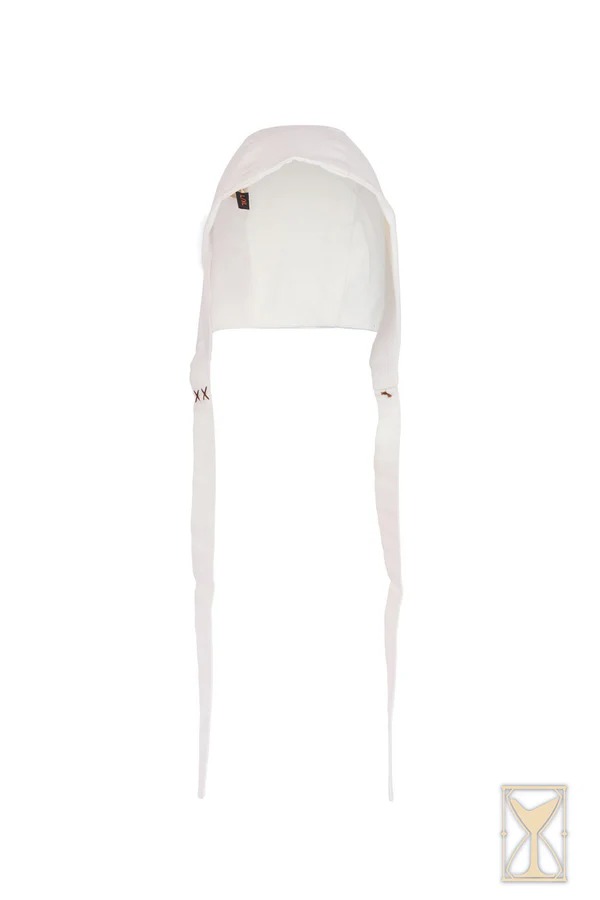
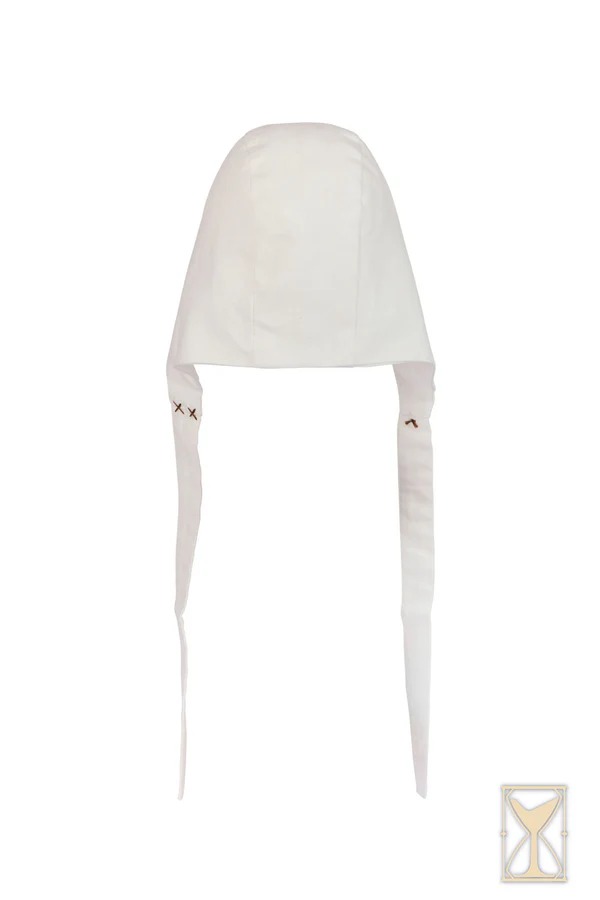
The 12th-century coif is a simple, close-fitting cap that covers your hair and ears. In the Middle Ages, it was a staple for almost everyone, either worn on its own or as a base layer. If you're wearing a helmet or a mail coif, this piece is essential for stopping your hair from getting snagged in the metal and making the fit much more comfortable.
We use breathable cotton for this coif to help keep your head cool when you're active. It secures with two simple ties under the chin, so it won't slide around while you move. While it's styled after high-medieval fashion, these stayed in use all the way through the late medieval period, so it fits a huge range of kits.
The seams are sewn flat to prevent those annoying pressure marks you normally get from wearing headgear stacked up. It also acts as a sweat barrier, which helps keep your more expensive hats and helmets looking good for longer.
Highlights
- Common headwear for everyone, from knights to peasants, throughout the Middle Ages.
- Breathable cotton helps manage heat and moisture during long events
- Under-armor protection stops your hair from pulling in mail or helmets
- Flat seams stay comfortable even when you're wearing heavy gear on top
- Easy to wash and maintain after a weekend in the dirt
- A period-fluid piece, that while in this style was normalized in the 12th century, was worn well into the late medieval period.